Widespread disaster shifts our perspective around our place here on earth.
As this summer closes out, I feel sobered and heartbroken by how much ecological crisis we have witnessed these last months. I felt anxious going into this summer, wondering what precious lands would be scorched by wildfires in the US. I did not expect to watch coastal swaths in the UK burn on the news, after months of fires in France and across Europe.
In the US and Canada combined, approximately 18 million acres have burned in wildfires this year. That’s roughly the size of South Carolina, or twice the size of Switzerland. Even spread across two massive countries, the scale feels unfathomable to me. And yet that is the reality, and burn season isn’t over yet.
Down in the Gulf of Panama, the seasonal upwelling system that feeds massive amounts of marine life just didn’t happen as it normally does. During the dry season, trade winds push warm surface water offshore and deep, cold ocean water rises to the surface, bringing nutrients that feed blooms of phytoplankton, which in turn feed the marine food chain. This year, El Niño has significantly warmed the Pacific, and nutrient-rich cold water has been pushed into deeper layers, meaning less food for the life that depends on it.
Further south, the same warming has disrupted the Humboldt Current, the nutrient-rich flow that normally sustains marine animals in Peru, Ecuador, and the Galápagos. Meanwhile, the warm Panama Current, which runs south toward those same waters, has only added to the heat.
Animals are traveling farther and farther to find food.
Off Jones Beach in New York, a pelagic manta ray was spotted feeding at the surface. The news reported on it as something that happens occasionally, but these animals are typically found in tropical waters. I find it alarming to witness a creature like that so far north.
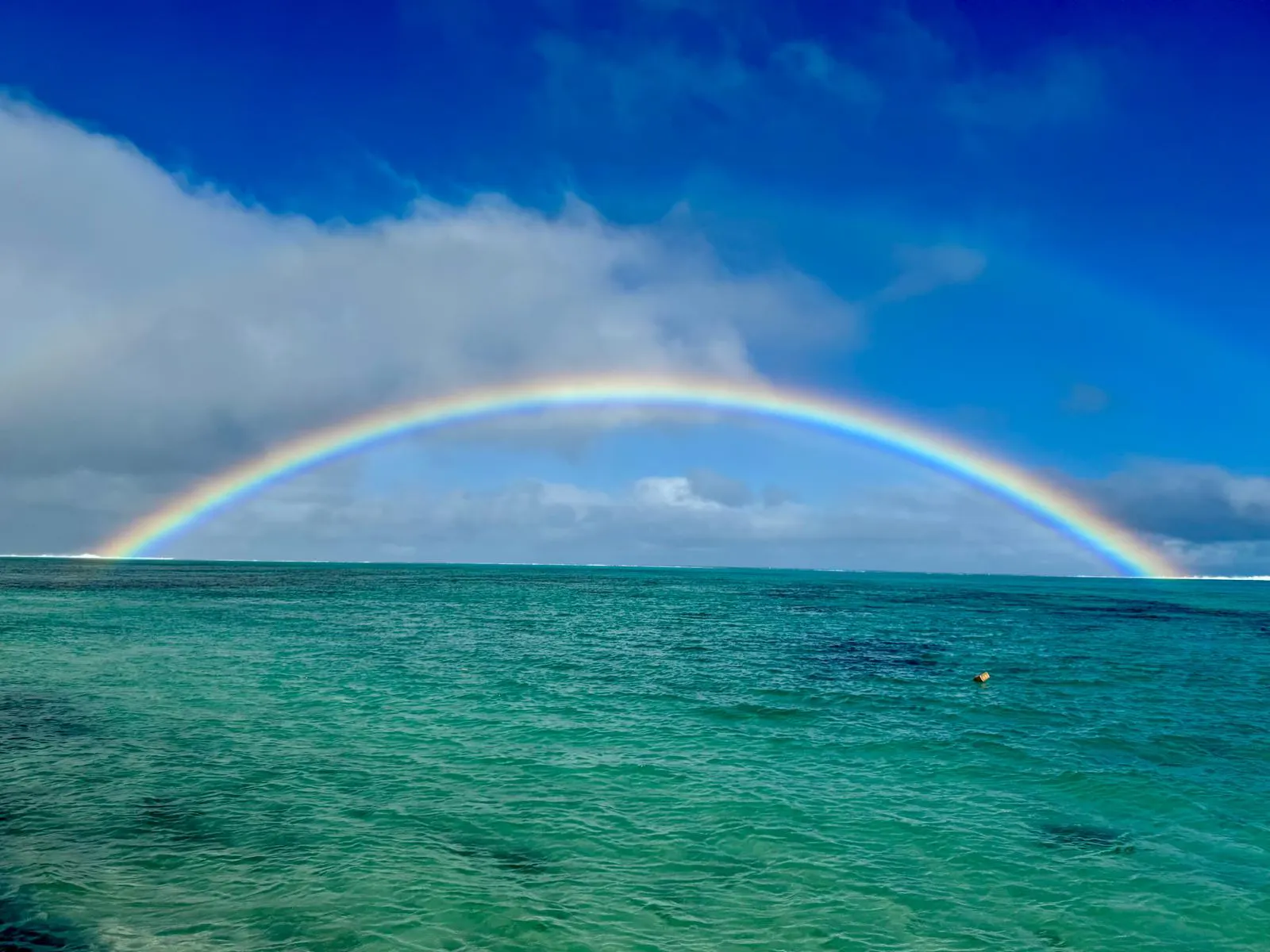
In the beginning of August, I was in French Polynesia, and the coral surrounding the atoll where we were has experienced significant change. Much of it is covered in brown algae, which can take over when coral dies and can inhibit coral regrowth. The algae are far more dominant than when I was last there in 2023.
The island where we were has been something of a success story for coral reef recovery and conservation, bouncing back after crown-of-thorns outbreaks, storms, and bleaching. But in these last years, the coral is not recovering, even as conservation efforts continue to grow and replant climate-change-resistant coral strains, remove algae, and educate visitors on how to interact with the reefs. All critical efforts to try to give the ecosystem every chance to regenerate while not truly being able to keep up with how quickly things are changing.
I have witnessed this happen in both the Florida Keys, where I grew up, and in Hawaiʻi. Colorful, alive reef ecosystems where I spent my childhood completely disappeared by the time I was a young adult.
I remember crying into my dive mask the last time I dove in Key Largo, on one of my favorite reefs, which had been reduced to a pile of coral rubble. I found one tiny rock formation with a nursery of baby lobsters.
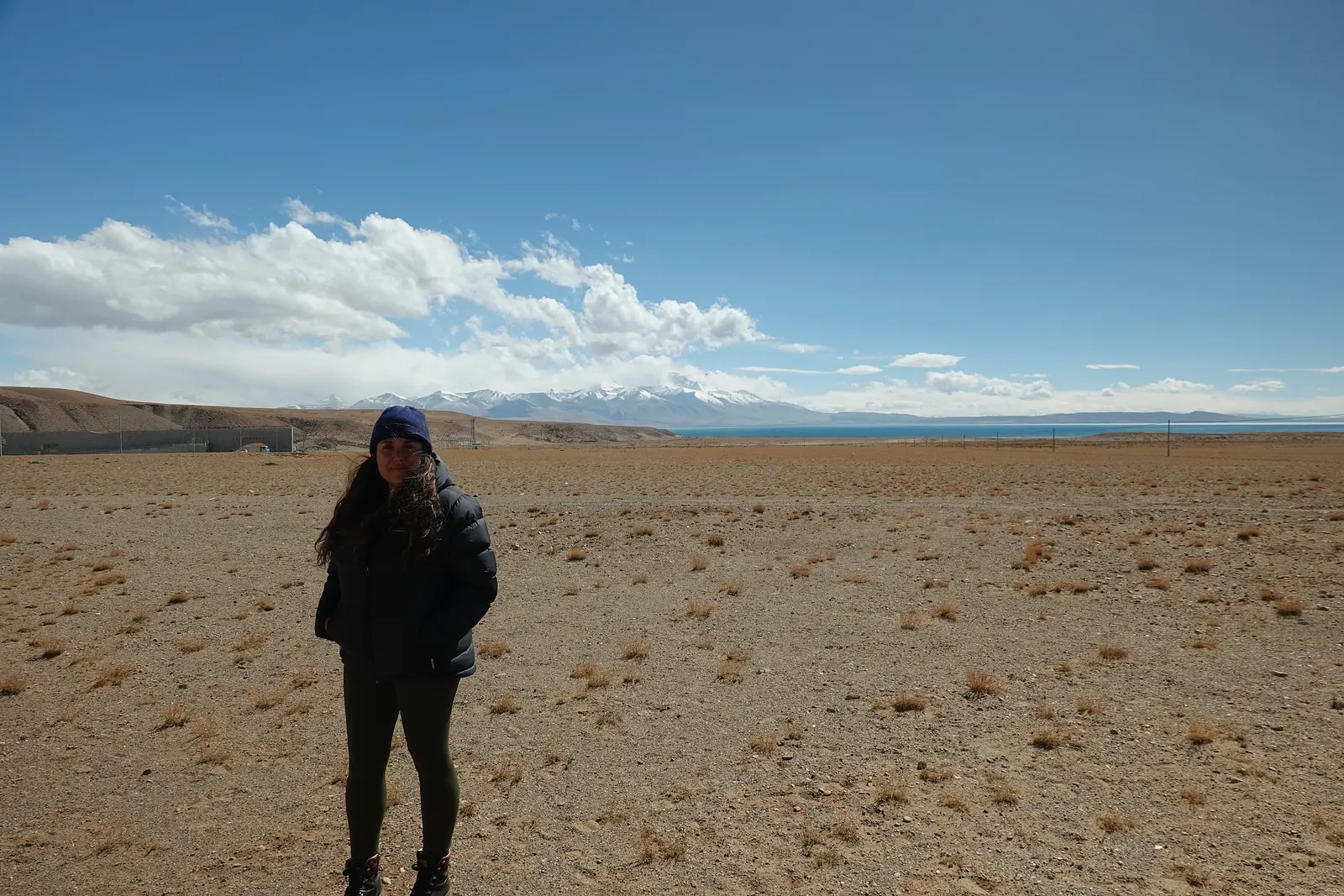
And in these past few days, I have watched, as most of us probably have, the footage of the massive flooding and its aftermath in Tibet and Nepal. I feel shocked by the scale of that disaster. I sat there stunned and devastated as I watched video of the port where, just last May, I crossed with a group from Tibet into Nepal, thrilled to be back under the tree line after weeks at high altitude, descending into the beauty of the valley.
That port is now completely gone. The missing persons number keeps rising. The people who were there buried under mud and debris. And the ripples of grief and devastation move around the globe.
Grief and reverence live hand in hand.
It’s how we let them move through us that can either create fragmentation and dilute our capacity to stay with the unfolding enormity of ecological devastation, or bring us into a deeper sense of connection with ourselves and this world.
Grief can be a doorway back into wholeness, if we let it be. And our inherent wholeness is an anchor of our belonging to this earth. Grief can miraculously cohere us through falling apart, essentializing what is true, washing away what is not.
When we are not fragmented in our presence, we become less dismissive and more accepting of our impact. We are more able to embrace what is here. Grief shows us how love wants to move. And grief, with reverence, opens us in a world of beauty and the ecstatic joy of being alive.
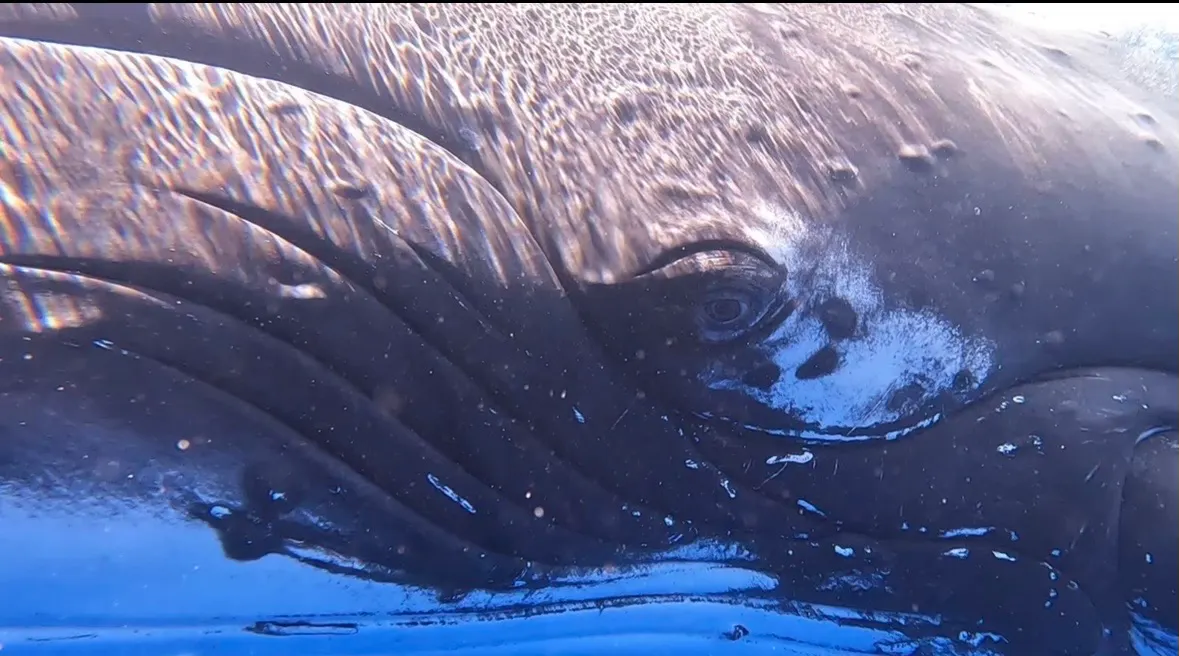
I got to spend time with the humpback whales this month, the privilege of my life, and something that breaks my heart open with more love than it could ever possibly hold.
These giant beings carry song in them. They communicate through a complex language that many scientists are dedicating their lives to understanding. I love that we have an innate longing for interspecies communication, to know the intricacies of how animals experience the world, and to learn from them.
Whales have so much to teach us about connection, play, and what it means to be part of a healthy ecosystem. They are already communicating so much to us, without us understanding what they are “saying” to each other. They hold wisdom for their own ways of navigating the earth, an inner technology that helps them travel across oceans to tiny remote islands and ancient coastal feeding waters.
To be in the presence of a whale, to have that much life force acknowledge you and look straight into you, is something that changes you forever. The first time it happened for me, it destroyed my sense of self in the most magnificent way. A wave of presence moved through me that is comparable to nothing else I’ve experienced.
The number of humpback whales has, thankfully, swelled over the last decades, approaching their pre-whaling numbers in some populations. But they still need widespread protections against vessel collisions, as well as ongoing conservation of the food sources they depend upon.
In other parts of the Pacific, whales are washing up on beaches from starvation. On the US West Coast, there have been 145 reported strandings of gray whales that have starved to death amid food shortages and warming water.
This is all an account of what is within my awareness and in my heart.
I don’t know if we could reach ecological collapse within my generation’s lifetime. But the pace at which things are moving makes it seem horrifically possible. And I don’t say this to catastrophize. Ubiquitous crises need none of that.
I believe witnessing is crucial to this moment in time, and is its own kind of ceremony. I believe in active witnessing, a kind of being that gets with the reality of a circumstance, however big or small, and meets it in the heart without rushing to fix or explain.
I have a pretty endless well of hope for the resilience, goodness, and soul of humanity. But my god, do we make it hard for ourselves. And right now, my current state is to feel and be with devastation. To let myself grieve what we are losing, so that I may also continue to live in wonder and reverence of this world.
I don’t have an ending for this.
What I do have are moments with the whales. And moments of goodbye with the 1,200-year-old ʻōhiʻa trees on my parents’ land that the recent hurricane brought down. And heartbreak in my chest for communities and lives lost who had no chance of escape.
And perhaps some brief conversations with friends about tragedy before we return to our days, or change the topic because it’s all too heavy. Most days, that is what we can handle inside the existential reality that creeps closer with every passing year.
But I do know that staying connected to where you are, caring about the places you choose to spend your time, and allowing yourself to be changed by what you witness matters. This is one of the ways I can stay without turning away.
The leg I have to stand on is one rooted in my own belonging on this earth. We are kin, to each other, to the animals, to the oceans and land. I don’t say that with idealism. I say it with a sense of connection that comes from something deeper than an idea of what we are to this earth.
Witnessing is part of remembering that we belong here. That we are a living memory of the earth and that her history lives inside our cells. And that collectively, we have more impact on the living world than any other creature.
So I pray that we learn to pause and listen for birdsong before it disappears.
To pay attention to what is still here.
And to let ourselves be changed by what we encounter.